

A List To Love
A simple practice for remembering that your neighbors are people to love, not prospects to recruit.

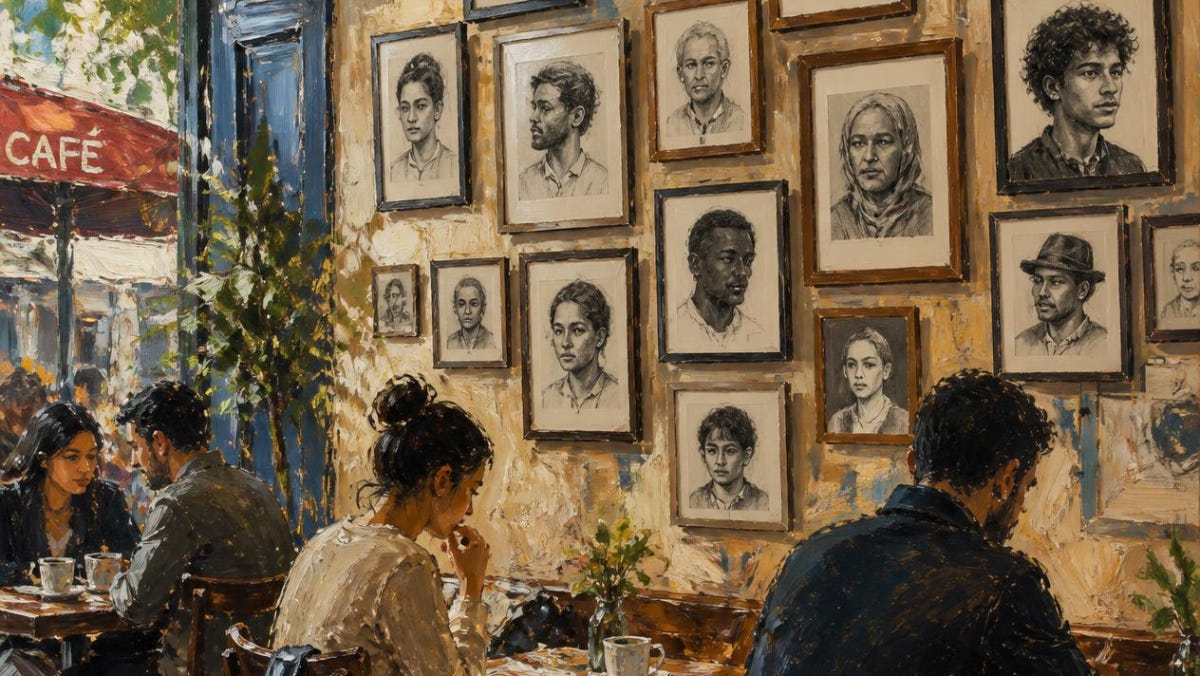
As I write this, I’m almost finished reading Theo of Golden by Allen Levi.
I love it.
No spoilers, I promise. But one of the story’s central threads involves a kind-hearted older man who becomes enchanted by hundreds of pencil sketches hanging on the wall of a small-town café. Every drawing is a portrait of someone from the community—a janitor, a musician, an attorney, a mother. Ordinary neighbors.
The old man begins buying the portraits one by one, then quietly giving each drawing to the person whose face it captures.
It’s a story overflowing with sacred human connection.
(And yes, if you love this book, I hope you’ll read Cathedrals of Connection next. Shameless plug.)
But the novel also gave me an image for something I’ve been trying to help churches imagine.
Does your church have... a list to love?
A list of people you know (or know of), who aren’t members of your church, but who you can walk beside and nourish?
Do you have a list of neighbors you can bless?
A different, and not altogether wrong, way to think of this list is as a collection of names and contact information of people you hope might join your church/ministry someday.
But if you only see the list that way, it can feel a little self-serving, a little transactional, and a little bit like a soulless task. That’s why instead of asking ministry leaders about their visitor list or their prospect list… I love to ask church/ministry leaders… Can you show me the list of neighbors you know… the neighbors you have a chance to love?
Imagine stepping into that cafe in the novel. You look around the walls and see artistic sketches of the people who walk your streets and eat at your restaurants. The complicated, layered, beautiful faces of the folks who ride your bus and shop at your grocery store. The people who bag your groceries. The woman who walks her dog past your church every morning. The dad who coaches Little League. The college student who is always working at the coffee shop. The teachers who teach your kids and the dentists who clean your teeth. Your neighbors.
Imagine seeing all those faces. You stand there studying one face. Then another. Then another.
And instead of wondering, How can we get them to church?
You wonder, How can we walk beside them this week?
This is the slow work of sacred community.
This is how churches grow.
This is how neighbors are best loved.
One at a time.
Human to human.
Serving them.
Showing up for them.
Nourishing their spirit.
Practically, this be as simple as a spreadsheet.
(A café covered in hand-drawn portraits is beautiful… but admittedly difficult to organize.)
I’d be happy to show you this example.

There are software tools available too (hint: most church software programs aren’t actually made to do this — they’re made to fundraise and count current members). I can tell you about this one1.
Honestly, you can start with a crayon and a napkin if you want. The format of your list matters far less than the stories and souls on your list.
It becomes a lot easier to love your neighbors when you know who they are.
It becomes even more likely that you’ll love your neighbors when you keep track of your encounters, you keep notes about their story, and you have a system for thinking about how to serve them next.
*Full Disclosure: This is a company I co-founded to help cause-based groups of all sorts grow. I’ve been doing that work for a long time. I am not here to sell you this tool, but it’s what I use to manage my own ministry’s “List To Love.”